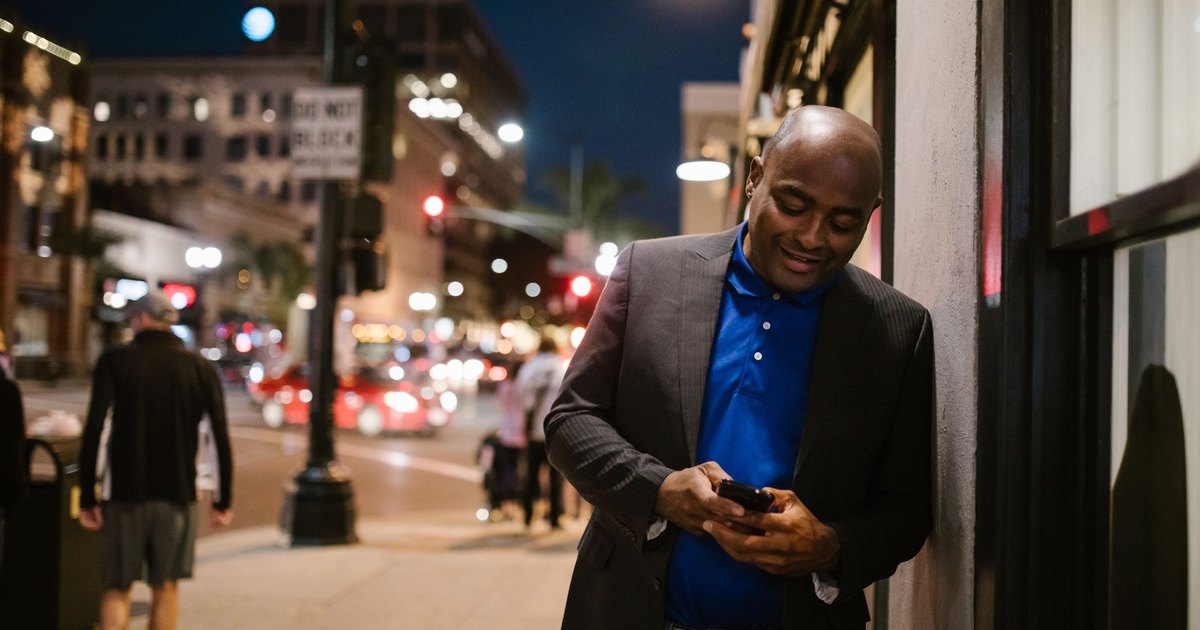
A Social Media Check Before a Networking Event
Quick answer: Before a room of strangers looks you up, look first. A social media check before a networking event means reading your own public posts the way a new contact would - the old hot take, the reply you forgot, the repost that reads worse without its moment - so you know what is already visible and can tidy or explain the handful that matter. It reads public posts only, it is not a background check, and a clean result means nothing public stood out, not that you are invisible.
You clip on the name tag, and within the hour a few of the people you just shook hands with will type your name into a search bar. Not to snoop - to place you. A face is forgotten by the coat check; a handle is searchable for good. Whatever surfaces in those thirty seconds is the version of you that arrives before you have said a second word.
You cannot stop them looking. You can decide whether you have looked first. Most people never do. They walk in trailing a decade of public posts and no idea which one a stranger hits on the first scroll. A quick self-read closes that gap - not to sand your history down to nothing, but to know what is already sitting on the table when you sit down.
Who is actually looking
The people at a mixer are not out to get you. They are future collaborators, clients, the person who forwards your name to someone hiring, the panel organiser deciding who to invite back. On LinkedIn and X especially, glancing at a new contact has become reflex - done on the train home, half-curious, taking under a minute. About 70% of employers research job candidates on social media during hiring (CareerBuilder), and that habit does not switch off at the door of a conference. The interesting stranger from the coffee line gets the same treatment.
None of this is sinister. It is just the room you are walking into. The real question is whether the first thing they read about you is something you would say to their face, or a five-year-old post you had forgotten was public.
What a social media check before a networking event does
A self-check is a plain read of your own public posts, done from the outside. Instead of trusting your memory of what you have posted - which is always kinder than the record - you look at what a stranger can actually see across your accounts and mark the parts that would make one pause. ACCOUNTability! does this at scale: it reads thousands of your public posts across X, TikTok, Instagram, Facebook and LinkedIn and flags extremist content, hate speech, transphobia and conspiracy material, showing you the actual post each time so the judgement stays yours. It costs $3.
Worth saying plainly what it is not. This is a personal read of posts you already made public, not a background check or consumer report, and it has no place in anyone's hiring, tenancy or credit decision. It also only works if there is something to read - a busy account gives it plenty, a near-silent one barely anything - and it sees public posts only, never private messages or anything you already deleted.
Before you shake fifty hands, find out what those fifty people will see. ACCOUNTability! reads thousands of your own public posts across X, TikTok, Instagram, Facebook and LinkedIn and flags extremist, hateful and conspiracy content - with the actual post as receipts - so you fix the few that matter instead of hoping nobody scrolls. $3.
Scan yourself firstRun the check yourself
You can do a rough version by hand in twenty minutes. It is tedious and easy to skim, but it beats walking in blind. Work through it in order:
- Search your own name and each handle in a private browser window, logged out, the way a stranger would.
- Scroll past the first page of results, because the posts that matter are rarely the most recent ones.
- Read old posts in the present tense: a joke or repost from years ago lands today with no context attached.
- Flag anything that reads as hateful, extremist or conspiratorial stripped of its moment, and decide whether to edit it, delete it, or be ready to explain it.
- Check what you like, share and follow, not only what you write, since a reshare reads as an endorsement to a stranger.
- Run a scan of your own public posts to catch what a tired manual scroll misses, then fix the few that actually count.
The point is not a spotless timeline. It is knowing, before you hand out your name, which two or three things a curious contact would find - so you have already dealt with them, or you have a calm answer ready.
What it will not do
Be honest with yourself about the limits. A self-check reads public posts only, so anything locked down or already deleted is out of reach. It leans on volume - an account that barely posts gives it little to go on. It is AI marking content with the receipts attached, which means context can trip it: dry sarcasm or reclaimed language sometimes gets flagged when nothing was meant, and that is exactly why it shows you the post to judge rather than deciding for you.
And deleting is not disappearing. Taking a post down clears your live profile, but screenshots, quote-posts and search caches may already hold a copy, so treat a clean-up as good housekeeping, not a vanishing act. A clean result means nothing in your public posts stood out today - not that you are invisible, and not that every trace of you is gone. Run in the right order, though, the check does the one thing that matters: you walk in already knowing what the room can see.
Key takeaways
- People look up new contacts as a reflex now, often within the hour - so the first impression is frequently made by your posts, not your handshake.
- A social media check before a networking event reads your own public posts from the outside, so you see what a stranger sees instead of trusting your memory.
- Read old posts in the present tense; context does not travel, and a line that made sense years ago can land badly on its own.
- It is a personal read of public posts, not a background check, and it has no part in any hiring or credit decision.
- A clean result means nothing public stood out, not that you are invisible - and deleting a post does not erase the screenshots of it.
Common questions
Why bother with a social media check before a networking event?
Because the people you meet will look you up, often before they reach the parking lot, and what they find is a first impression you do not get to make in person. A quick self-read shows you which of your public posts a stranger surfaces first, so you can tidy or explain the few that matter instead of being surprised by them later. It reads public posts only, and a clean result means nothing public stood out, not that you are invisible.
What will people actually find when they look me up?
Usually your most recent public posts first, then whatever a search engine has cached from years back: old opinions, replies, reshares, photos you forgot were public. Context does not travel with any of it, so a line that made sense in the moment can read very differently on its own. Logging out and searching your own name and handles is the fastest way to see the same thing they will.
Is this the same as a background check?
No. This is a personal read of your own public posts for red flags like extremism, hate speech or conspiracy content, with the actual post shown so you can judge it yourself. ACCOUNTability! reads thousands of public posts across X, TikTok, Instagram, Facebook and LinkedIn for $3. It is not a background check or consumer report and plays no part in any hiring or credit decision, and a clean result only means nothing public stood out.
Walk in knowing what they'll see
Before your next event, ACCOUNTability! reads thousands of your own public posts across X, TikTok, Instagram, Facebook and LinkedIn and flags extremist content, hate speech, transphobia and conspiracy stuff - each flag shows the actual post so you can judge it yourself and fix the ones that matter. There are tools that do this for companies; as far as we know, nothing built for regular people. $3 a scan, no sales call.
Run a scan