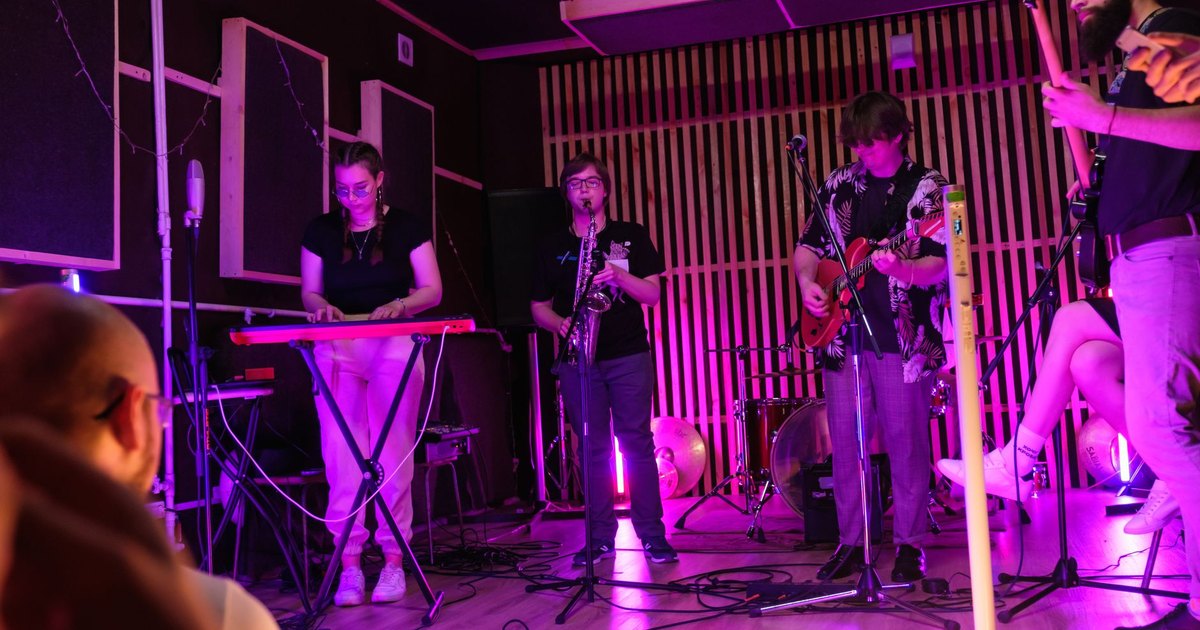
How to Vet a Bandmate Before You Join a Band
Quick answer: Read the new player's public posts before you commit, because once your names share a poster their feed is part of your act too. Find the accounts they actually use across X, TikTok, Instagram, Facebook and LinkedIn, scroll past the pinned highlights into the older replies, and look for a pattern rather than one bad night. If reading it all by hand is more than you have time for, a scan flags extremist, hateful or conspiracy content and shows you the actual post so you make the call. It reads public posts only, it is not a background check, and a clean result means nothing public turned up - not that the person is vouched for.
The audition went great. The new guy can actually play - locked in with the drummer by the second song, knew the changes cold, even brought his own cables. Everybody's grinning in the parking lot afterward. Then someone thumbs open his profile on the drive home, keeps scrolling, and the grin goes flat.
That drive home is the moment this whole thing turns on. A band is a small business you run on trust and proximity: shared van, shared merch table, shared name on every flyer. The talent is the easy part to check - you heard it in the room. What you did not hear is how he talks to strangers online, what he repeats when he thinks the crowd agrees, whether the account is a normal musician's feed or something you would not want stapled to your logo.
Why a bandmate's feed becomes your problem
Bands get tagged, screenshotted and quote-posted as a unit. Book a decent room and the promoter looks everyone up. Land a support slot and the headliner's fans start clicking through the whole lineup. A booker who spots one member's account full of slurs or conspiracy reposts does not send a polite note - they quietly stop returning emails, and nobody tells you why. The ugly post was his. The cancelled show is everyone's.
This is not about policing taste in memes. It is about the stuff that ends partnerships: an account that keeps circling back to extremist talking points, hate aimed at a group, a habit of amplifying disinformation to a crowd that eats it up. You are about to spend a year of weeknights next to this person and hand them a share of your reputation. Reading their public posts first is basic diligence, the same as listening to their playing before you say yes.
What actually counts as a red flag
Not every old post is a verdict. Everyone has a cringe tweet from a decade ago; that is being a person on the internet, not a warning sign. What you are hunting for is a pattern - the feed that keeps returning to the same place.
- Repetition, not a one-off. One clumsy joke is noise. The same theme, week after week - a group they keep sneering at, a grievance they keep feeding - is signal.
- What they boost, not just what they write. People are careful with their own words and careless with the reply button. A timeline of reposts and pile-on replies often tells you more than the polished original posts.
- Punching at people, not ideas. Arguing politics is fine. Dehumanizing a race, a religion, women, or trans people is the line, and it is usually not subtle once you scroll far enough.
- Conspiracy as a personality. An odd theory shared once is nothing. A feed built around it - recruiting, "do your own research," the works - is a person who will bring that energy to the group chat and the merch table.
Reading a stranger's whole timeline by hand is a slog, and the worst stuff hides in the replies. ACCOUNTability! reads thousands of a person's public posts across X, TikTok, Instagram, Facebook and LinkedIn and flags extremist, hateful and conspiracy content - each flag shows the actual post as receipts - so you can judge a prospective bandmate in minutes instead of an evening. $3.
Scan a prospective bandmateHow to vet a bandmate in an afternoon
You do not need to turn into an investigator. To vet a bandmate well, you just need to look at the same public feed a booker would, and look a little deeper than the front page. Here is the short version.
- Find their public profiles across the platforms they actually use - X, TikTok, Instagram, Facebook and LinkedIn - so you are looking at the same feed a promoter or venue would see.
- Read a few months back, not just the top posts, since the pinned stuff is curated and the older replies rarely are.
- Watch the replies and reposts, not only the originals, because what someone amplifies says as much as what they write.
- Run a scan to flag extremist, hateful or conspiracy content and put the actual post in front of you, so you judge the context yourself.
- Talk it through with the band before the next rehearsal and decide together, keeping the receipts rather than the rumor.
Do it once, early, before you have played three shows and it feels awkward to bring up. A quiet half hour now beats an ugly conversation after a booker has already seen what you missed.
Where this check stops
Be straight about the limits, because they matter. A scan reads public posts only - a private or locked account is out of reach, and an empty one gives it nothing to go on, so a thin timeline is a thin result, not a clean bill of health. It is AI flagging content with the receipts attached for you to read, and context can fool it: reclaimed language, in-jokes, and flat sarcasm sometimes get marked when nothing was meant, which is the whole reason it shows you the post instead of a score.
It is a personal read of what a person has already made public - not a background check, not a criminal-records search, and not something to fold into a hiring or contract decision if the band ever pays this person; use a licensed provider for that. A clean result means nothing in their public posts stood out. It does not mean the person is safe or vouched for. What it buys you is a look, in their own words, before you tie your name to theirs.
Key takeaways
- Once your names share a poster, a bandmate's public feed is part of your act - bookers and headliners' fans look everyone up.
- Hunt for a pattern, not a single bad post: repetition, what they amplify, hate aimed at a group, conspiracy as a whole personality.
- Read a few months back and watch the replies and reposts, not just the pinned highlights - the careless stuff lives there.
- A scan reads public posts only and is not a background check; a clean result means nothing public turned up, not that the person is vouched for.
- Do the check early, before three shows in makes it awkward, and decide together with the receipts in front of you.
Common questions
How do I vet a bandmate before the first rehearsal?
Read their public posts the way a promoter or a venue would. Find the accounts they actually use across X, TikTok, Instagram, Facebook and LinkedIn, scroll back a few months instead of stopping at the pinned stuff, and pay attention to what they reply to and repost, not only what they write. If reading everything by hand is too much, a scan flags extremist, hateful or conspiracy content and shows you the actual post so the call stays yours. It reads public posts only, it is not a background check, and a clean result means nothing public turned up, not that the person is vouched for.
Is it fair to judge a musician by their old posts?
You are not judging a bad take from years ago. You are looking for a pattern - repeated hate speech, extremist content, conspiracy stuff someone keeps amplifying - the kind of thing that follows the whole band once your names are on the same poster. Context matters, which is exactly why you read the post yourself rather than trusting a label. A joke that landed badly once is not the same as a feed that keeps returning to the same ugly place.
What if the bandmate's accounts are private or empty?
Then there is not much to read, and the check comes back thin. A scan only sees public posts, so private or barely used accounts give it little to work with, and that is not a red flag or a green light on its own. Treat a quiet result as a quiet result. Meet in person, play a few times, and let how someone actually behaves in a room count for more than an empty timeline.
Hear the playing, then read the feed
Before you put your name next to a new player's, ACCOUNTability! reads thousands of their public posts across X, TikTok, Instagram, Facebook and LinkedIn and flags extremist content, hate speech, transphobia and conspiracy stuff - each flag shows the actual post so you can judge it yourself. There are tools that do this for companies; as far as we know, nothing built for regular people. $3 a scan, no sales call.
Run a scan